
 Image 1 of 3
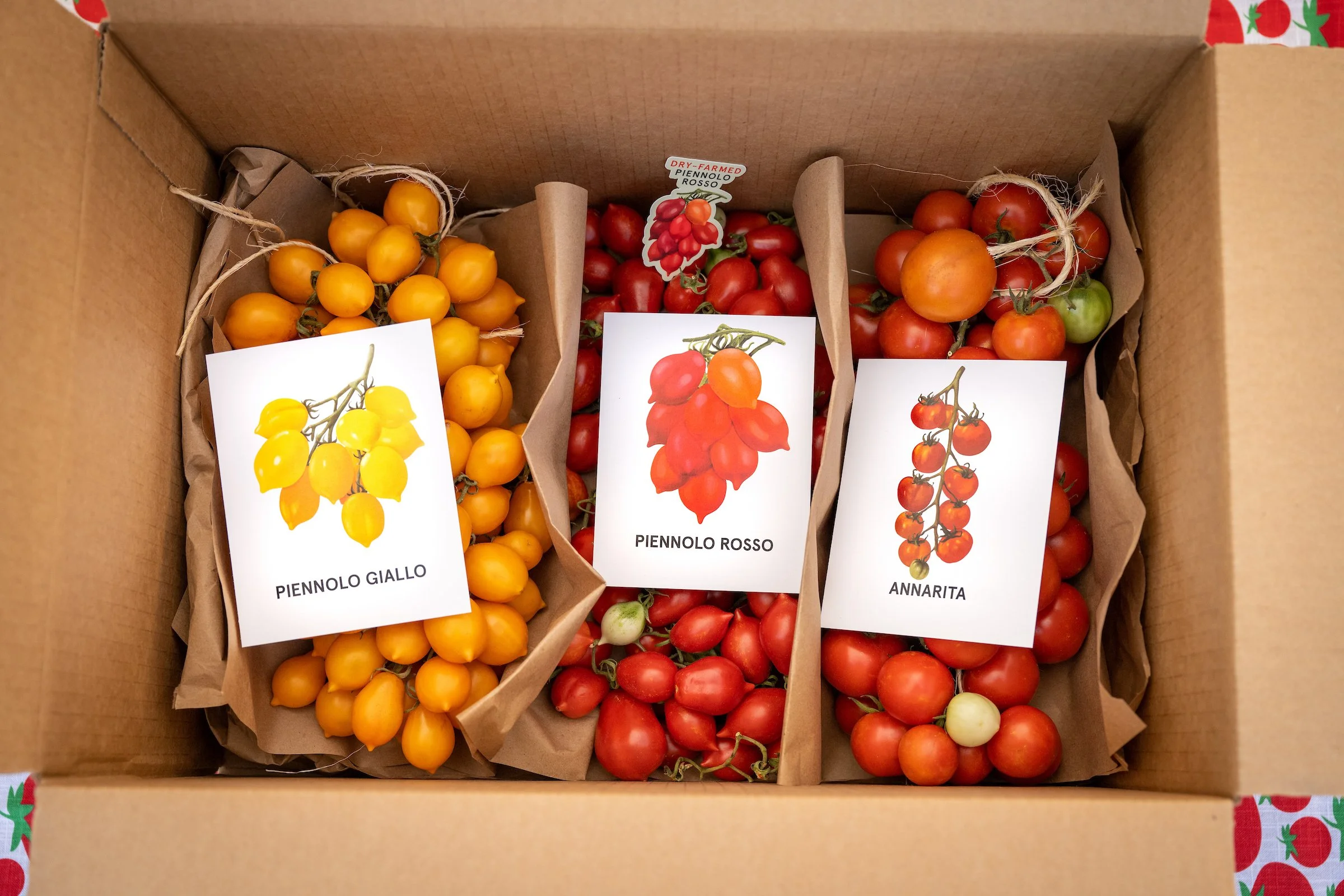 Image 2 of 3
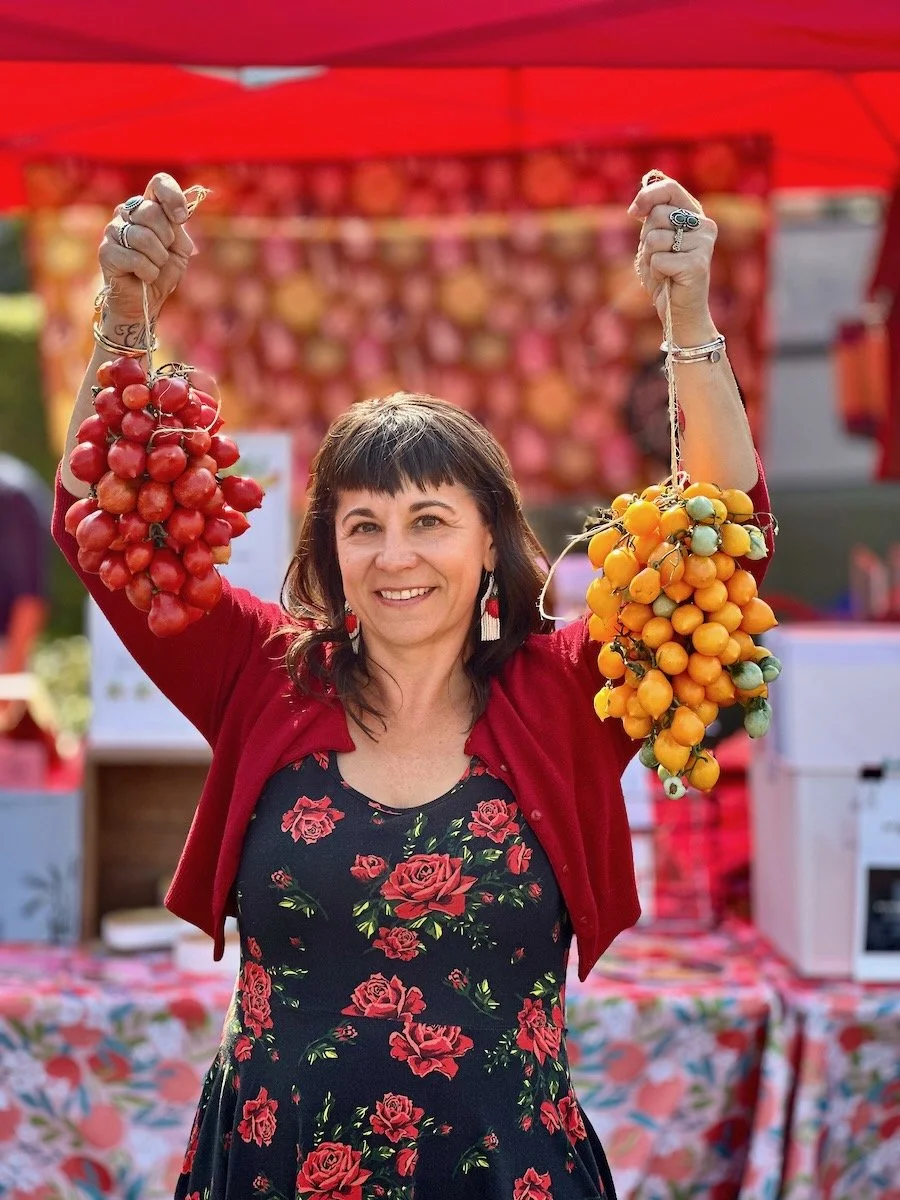 Image 3 of 3
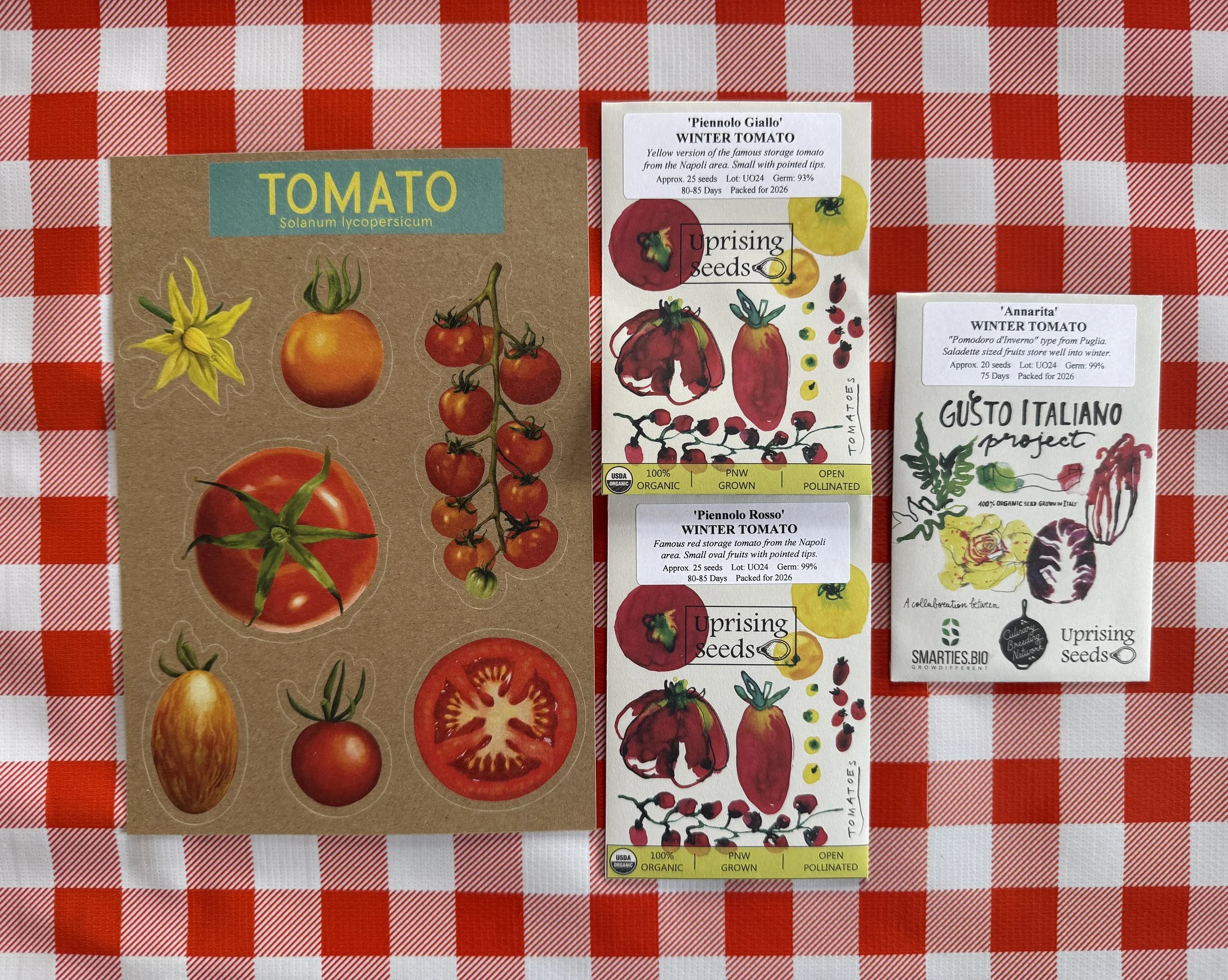
Pomodori d'inverno (winter tomatoes) seed is grown by Uprising Seeds in Bellingham, WA.
Three seed packets are included:
1 - Piennolo Rosso
2 - Piennolo Giallo
3 - Annarita
These three varieties are pomodori d'inverno (winter tomatoes). Picked ripe by the truss during the usual tomato season they are then hung w/ twine in clusters, or laid in single layers in wooden boxes with good ventilation where they can store for up to 6 months to be eaten through the fall & winter.
‘Piennolo Rosso’ originates from the world-famous tomato Piennolo del Vesuvio DOP traditionally grown on the slopes of Mount Vesuvius near Naples, Italy. The small oval fruits have a pointed nipple at the blossom end, and their high dry content makes them perfect for long storage. Harvested by the truss, they are often hung in long twine loops as tomato 'ristras' ("piennolo" meaning "hanging" in Neapolitan dialect). Piennolo has a rich, sweet flavor that continues to concentrate over time. They are stored for months and eaten fresh well into the winter which is the reason they are referred to as "pomodoro d'inverno" in Italy – winter tomatoes.
‘Annarita’ - This tomato’s namesake had a father who drove trains for a living and brought seed of this winter tomato (aka Pomodoro d’Inverno) from Puglia 50 years ago when he moved north to Padova. Annarita shared the seed with Andrea Ghedina of Smarties.bio, who grew it for a few years before giving some seed to Lane Selman of the Culinary Breeding Network in April 2019. The seed is now grown and sold by Uprising Seeds in Bellingham, WA. It is a wonderful tomato that can be stored for six months or longer - hung in clusters in a cool, sheltered, well-ventilated place, like a garage, or laid in wooden boxes. It is most often consumed raw; on friselle (a special dry bread from Puglia) with a drizzle of oil and oregano – similar to bruschetta; or cooked to flavor dishes such as fish soup or sauces. It is not used to make tomato puree, so just don’t even think about it :)
‘Piennolo Giallo’ is the yellow version of the world-famous Piennolo del Vesuvio DOP grown on the slopes of Mount Vesuvius near Naples, Italy. This natural mutation was a spontaneous field hybridization discovered in the kitchen garden of a local contadino, or small farmer, who named it after his granddaughter, Giulia. So it is often referred to as Giulia’s Yellow, or Giallo di Giulia, abbreviated to GiaGiu. It didn’t take long for the yellow piennolo to become a big hit in the pizzerias and trattorias of Naples, both for its pleasant balance of acidity and sweetness, and for its vibrant color, a gift to the artistically minded pizzaiolo. The small oval fruits have a pointed nipple at the blossom end, and their high dry content makes them perfect for long storage. Harvested by the truss, they are often hung in long twine loops as tomato 'ristras' ("piennolo" meaning "hanging" in Neapolitan dialect). They are stored for months and eaten fresh well into the winter which is the reason they are referred to as "pomodoro d'inverno" in Italy – winter tomatoes.
Pomodori d'inverno (winter tomatoes) seed is grown by Uprising Seeds in Bellingham, WA.
Three seed packets are included:
1 - Piennolo Rosso
2 - Piennolo Giallo
3 - Annarita
These three varieties are pomodori d'inverno (winter tomatoes). Picked ripe by the truss during the usual tomato season they are then hung w/ twine in clusters, or laid in single layers in wooden boxes with good ventilation where they can store for up to 6 months to be eaten through the fall & winter.
‘Piennolo Rosso’ originates from the world-famous tomato Piennolo del Vesuvio DOP traditionally grown on the slopes of Mount Vesuvius near Naples, Italy. The small oval fruits have a pointed nipple at the blossom end, and their high dry content makes them perfect for long storage. Harvested by the truss, they are often hung in long twine loops as tomato 'ristras' ("piennolo" meaning "hanging" in Neapolitan dialect). Piennolo has a rich, sweet flavor that continues to concentrate over time. They are stored for months and eaten fresh well into the winter which is the reason they are referred to as "pomodoro d'inverno" in Italy – winter tomatoes.
‘Annarita’ - This tomato’s namesake had a father who drove trains for a living and brought seed of this winter tomato (aka Pomodoro d’Inverno) from Puglia 50 years ago when he moved north to Padova. Annarita shared the seed with Andrea Ghedina of Smarties.bio, who grew it for a few years before giving some seed to Lane Selman of the Culinary Breeding Network in April 2019. The seed is now grown and sold by Uprising Seeds in Bellingham, WA. It is a wonderful tomato that can be stored for six months or longer - hung in clusters in a cool, sheltered, well-ventilated place, like a garage, or laid in wooden boxes. It is most often consumed raw; on friselle (a special dry bread from Puglia) with a drizzle of oil and oregano – similar to bruschetta; or cooked to flavor dishes such as fish soup or sauces. It is not used to make tomato puree, so just don’t even think about it :)
‘Piennolo Giallo’ is the yellow version of the world-famous Piennolo del Vesuvio DOP grown on the slopes of Mount Vesuvius near Naples, Italy. This natural mutation was a spontaneous field hybridization discovered in the kitchen garden of a local contadino, or small farmer, who named it after his granddaughter, Giulia. So it is often referred to as Giulia’s Yellow, or Giallo di Giulia, abbreviated to GiaGiu. It didn’t take long for the yellow piennolo to become a big hit in the pizzerias and trattorias of Naples, both for its pleasant balance of acidity and sweetness, and for its vibrant color, a gift to the artistically minded pizzaiolo. The small oval fruits have a pointed nipple at the blossom end, and their high dry content makes them perfect for long storage. Harvested by the truss, they are often hung in long twine loops as tomato 'ristras' ("piennolo" meaning "hanging" in Neapolitan dialect). They are stored for months and eaten fresh well into the winter which is the reason they are referred to as "pomodoro d'inverno" in Italy – winter tomatoes.